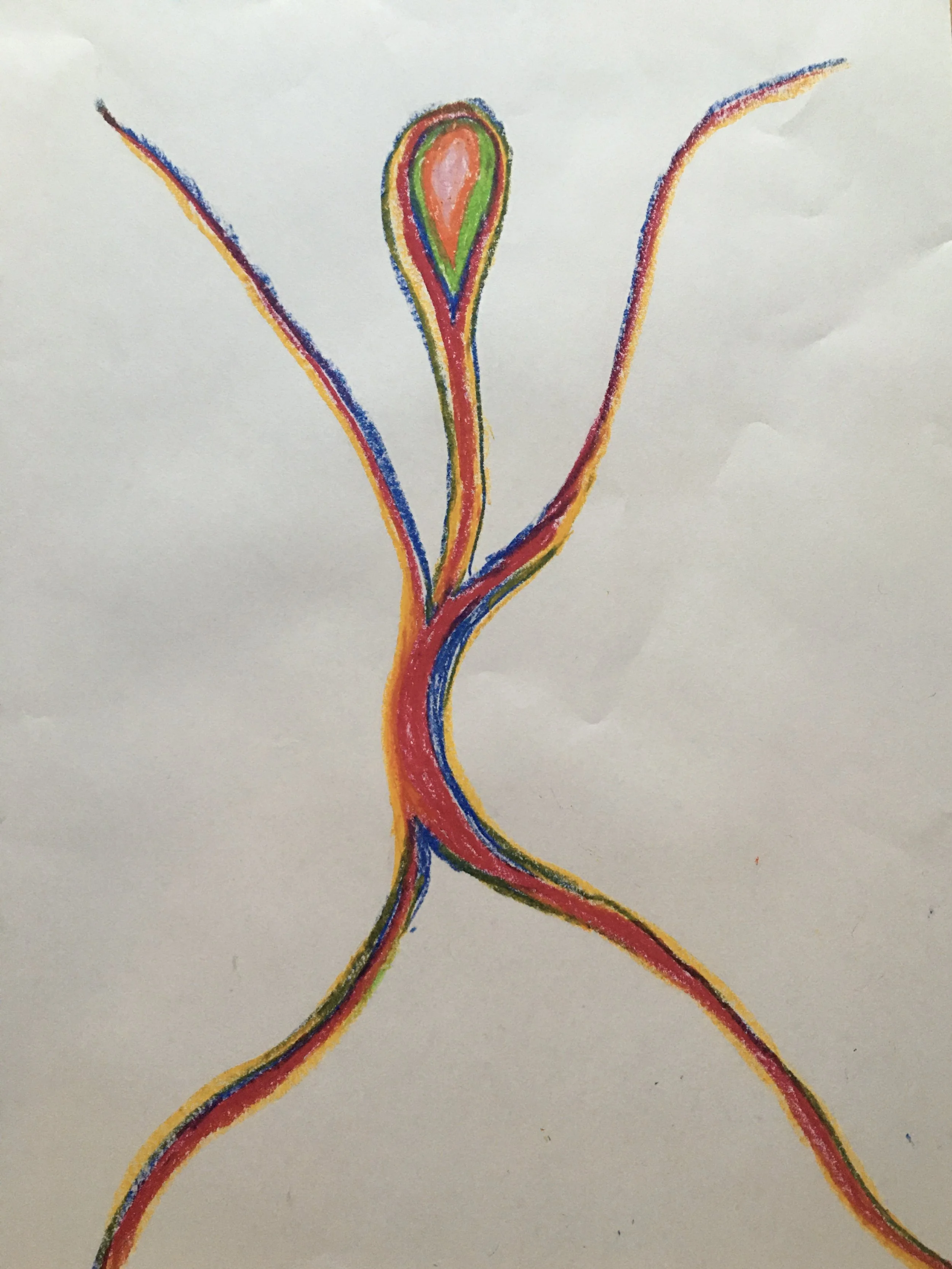
Dance Movement Therapy
"Oh, I cannot dance!" This is what I am often told as soon as I say I am a dancer.
"So, is it like physio, rehabilitation, or flexibility?" And this is what I am normally asked when I add the word therapy.
Dance is the freedom for the soul to emerge, it is the bridge between the unconscious and the conscious. Dance is the way for the different parts of ourselves to communicate, connect, and relate to each other.
Dance is the most ancient way to belong.
I am a Dance Movement Therapist (DMT) trained at the International Dance Therapy Institute of Australia (IDTIA) and a professional member of the Dance Movement Therapy Association of Australasia (DTAA). I am also a Somatic Movement Educator (SME) and an Infant Developmental Movement Educator (IDME) through the School for Body-Mind Centering® (BMC®).
"Oh, I cannot dance!" This is what I am often told as soon as I say I am a dancer.
"So, is it like physio, rehabilitation, or flexibility?" And this is what I am normally asked when I add the word therapy.
I normally smile upon hearing these comments, and an internal dance starts as I find my way through to an answer that makes sense to the person in front of me.
Let me tell you a bit more about my journey and what to expect:
My Journey
"What is dance?" is the first thing that I normally address by saying, "You might surprise yourself." 😊 And that is what happened to me when I did my very first Dance Movement Therapy session, in which I discovered answers that I was finally not questioning like I would normally do during a verbal therapy session. My very first "Aha!" moment was discovering this exact statement within me: "I have to help myself." This came from a sequence of gestures where the right hand was supporting the left hand, and so forth; bringing a sense of inner peace and unity that was so beautiful to experience.And right there, I realised that finding answers through the body is a lived experience; it is undeniably our own, and it cannot be questioned. I suddenly had no doubts and there was a clear commitment towards this statement. An inner shift. From there, a new journey of healing unfolded.
What is Dance Movement Therapy
Dance surely means different things depending on the context: dancing in a club; ballroom dancing; tango; dance performances on stage; breakdance; cool dance videos on Instagram; street performances; tricks, skills, and extraordinary physical coordination, etc. What about a gentle swaying of the hips side to side and noticing what that does for you? Can we call it dance? Yes, indeed. And the therapy bit? That is because we simply allow the space to open and to reveal what the body expresses of our meaning-making as a whole.
Within a Dance Movement Therapy definition, dance is the freedom for the soul to emerge, and it is the bridge between the unconscious and the conscious. Dance is the way for the different parts of ourselves to communicate, connect, and relate to each other.
The Dance Movement Therapy Association of Australasia (DTAA) defines Dance Movement Therapy (DMT) as the relational and therapeutic use of dance and movement to further the physical, emotional, cognitive, social, and cultural functioning of a person.
Movement is life, and dance is the expression of that preciousness. Within DMT, dance and movement are not about achievements; instead, it is about entering a state of being, allowing what is ready to emerge, and letting that be harvested.
As movement is our first and universal language, it allows us to engage with beings of any age, cultural background, and need. It allows us to simplify things and to go back to the roots, to the basics. Sensing is the way we make sense of the world and of the way we participate in it.
What can DMT help you with
A healthier, more expressive physical body
Improved social skills and trust in reciprocal relationships
Ability to regulate emotions and communicate more effectively
Increased cognitive capacity: attention, memory, executive function
Embodied wholeness and vitality – a greater sense of self
Working through trauma
An improved sense of comfort in the body and your whole self
Embracing a more expansive self, empowering you to take up space in the world
I specialise in the following fields:
Primary carers and their babies through the lenses of attachment and development
Disabilities
Autism
Brain injury
Parkinson's
Eating disorders
What to expect in a session
DMT can be done in a group or individually.
Group sessions are structured, led sessions where people are invited into certain explorations through the body, potentially involving props like balls, fabrics, elastics, paper, etc. These give the opportunity to experience specific qualities and patterns that want to be explored, and they also enable individual and relational play.
Whilst group sessions expand and evolve through "groupness," the sense of community, and the collective experience, individual sessions are far more tailored to the individual experience and response. Here, the attunement between myself as a therapist and the other person (or people, in the case of a carer with their child) is fundamental and at the core.
Care is at the core of my work—care for self, others, and space.
For this, I draw on active listening, Nonviolent Communication (NVC) principles, the more than human world, my training in Somatics, and my developed capacity to stay and be with matter and with what is, without assuming that care means the same thing for everyone. It is a constant process which also includes active consent.